

logo

SigNature® Molecular Tags complement DNA Barcoding for identifying Aloe vera in complex formulations

hidden spacer image
DNA underlay

SigNature® Molecular Tags complement DNA Barcoding for identifying Aloe vera in complex formulations

Posted on

Authors: Barbara Brockway, Ph.D., Ben Liang, Ph.D., Yuhua Sun, Julia Krumsiek and James Hayward, Ph.D.

Abstract

Allegations have recently surfaced regarding the amount of Aloe vera contained in several finished products. In response to intense scrutiny from the press, several class action lawsuits have been filed against the manufacturers of these products.

Applied DNA Sciences (“Applied DNA”) conducted independent testing of some of the products cited in these lawsuits. Commercial samples were analyzed for the presence of Aloe vera Bar Code of Life (BCOL). Testing revealed that Aloe vera BCOL was absent from Aloe vera gel products, and was unreliably detectable in three off-the shelf skin care products made by a leading global brand that prides itself on its well–managed supply chain. Since the products tested were made with either Aloe barbadensis Leaf Juice or Aloe barbadensis Leaf Juice Powder, the inconclusive results may be due to the BCOL being damaged during processing.

Further testing indicated that when concentrated Aloe barbadensis Leaf Juice Powder was tagged with SigNature DNA (prior to being incorporated into the same three off-the-shelf finished products), the molecular tag was 100% detectable even at serial dilutions down to 1 million-fold. The results of our laboratory testing indicate that DNA-tagged botanicals can be readily authenticated, even in complex cosmetic products in which the tag is present at extremely low levels.

Introduction

Recent reports in Bloomberg Businessweek found that 1H NMR analyses could not detect the presence of the acemannan (unique sugars known to occur in Aloe vera) in off-the shelf Aloe vera Gels purchased from major US retailers. The journalist concluded that the ingredient behind the driving claims was absent. Another method of identifying botanical materials in mixtures is to look for the plant’s Bar Code of Life (BCOL) DNA. Laboratories in the US recently failed to find the BCOL for the botanicals in certain in store-brand herbal supplements and as a result, in February 2015, the New York Attorney General asked the companies involved to provide information such as how the ginseng, St. John’s wort, echinacea and garlic were processed. GNC Holdings Inc., Target Corp., Wal-Mart Co., and Walgreens Inc. were instructed to stop selling these products as tests showed these supplements did not contain the ingredient as advertised. Scientists from Applied DNA Sciences (APDN) examined the Aloe vera gels reported in Bloomberg Businessweek to have no acemannan and found no evidence of BCOL DNA from Aloe vera.

In this paper, we report the results of our study on three Aloe vera skin care creams, which led us to the conclusion that BCOL is not a reliable method for identifying botanicals in cosmetics and related products.

Materials

Three off-the shelf Aloe Vera skin care products made by a leading global brand, were purchased for this study. The ingredients for the three products are as follows:

Water, Ethylhexyl Palmitate, Glycerin, Propylene Glycol, Pentylene Glycol, Dimethicone, Isononyl Isononanoate, Sesamum Indicum Seed Oil/Sesamum Indicum (Sesame) Seed Oil, Stearyl Alcohol, Glyceryl Stearate, PEG-100 Stearate, Lanolin, Polyglyceryl-3 Beeswax, Alpha-Glucan Oligosaccharide, Tocopheryl Acetate, Xanthan Gum, Aloe Barbadensis Leaf Juice Powder, Levulinic Acid, p-Anisic Acid, Sodium Levulinate, Sodium Hydroxide, Avena Sativa Kernel Extract/Avena Sativa (Oat) Kernel Extract, Potassium Sorbate, Tocopherol

Water, Isononyl Isononanoate, Glycerin, Pentylene Glycol, Cyclopentasiloxane, Butylene Glycol, Cetearyl Alcohol, Myristyl Myristate, Sesamum Indicum Seed Oil/Sesamum Indicum (Sesame) Seed Oil, Cyclohexasiloxane, Cetyl Alcohol, Myristyl Alcohol, Palmitic Acid, Stearic Acid, Cetearyl Glucoside, Aloe Barbadensis Leaf Juice, Myristyl Glucoside, Acrylates/C10-30 Alkyl Acrylate Crosspolymer, Bisabolol, Xanthan Gum, Avena Sativa Kernel Extract/Avena Sativa (Oat) Kernel Extract

Water, Glycerin, Pentylene Glycol, Caprylic/Capric Triglyceride, Butylene Glycol, Glyceryl Stearate Citrate, Isononyl Isononanoate, Elaeis Guineensis Oil/Elaeis Guineensis (Palm) Oil, Myristyl Myristate, Octyldodecanol, Sesamum Indicum Seed Oil/Sesamum Indicum (Sesame) Seed Oil, Squalane, Cetearyl Alcohol, Cetyl Alcohol, Butyrospermum Parkii Butter/Butyrospermum Parkii (Shea) Butter, Panthenol, Aloe Barbadensis Leaf Juice Powder, Acrylates/C10-30 Alkyl Acrylate Crosspolymer, Xanthan Gum, Bisabolol, Polylysine, Sodium Hydroxide, Disodium EDTA, Myristyl Alcohol, Stearyl Alcohol, PEG-30 Dipolyhydroxystearate, Trideceth-6, Avena Sativa Kernel Extract/Avena Sativa (Oat) Kernel Extract, Citric Acid.

Experimental

Part 1 – BCOL
The Bar Code of Life (BCOL) sequences were verified with fresh Aloe plants (data shown as the positive controls in figures 1 – 3). 150 mg of each of the skin creams containing Aloe vera was used for standard DNA extraction. Polymerase chain reaction (PCR) and Capillary Electrophoresis (CE) analysis were performed to identify the Aloe BCOL segments. Each cream was sampled 4 times.

Part 2 – Aloe Vera with DNA molecular tag
The source of Aloe vera used in this study was a commercially-sourced Concentrated Aloe barbadensis Leaf Juice Powder. DNA tag was tested at two concentrations in the Concentrated Aloe barbadensis Leaf Juice Powder differing by 10-fold and designated as 1X  and 10X, DNA-tagged Aloe vera powder was integrated in the three creams: Day Cream A, Night cream B and Rescue cream at 1%. The DNA cream was serially diluted with their original cream to 1 million-fold. DNA was extracted and authenticated at each dilution by PCR/CE.

Results
Part 1 — BCOL
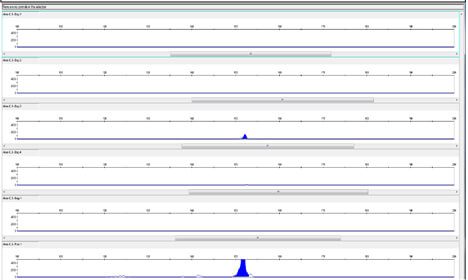
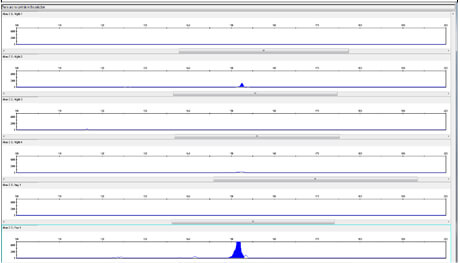
BCOL in Day Cream A
Figure 1: BCOL in Day Cream A
BCOL in Day Cream B
Figure 2: BCOL in Night Cream B
BCOL in Rescue Cream
Figure 3: BCOL in Rescue Cream

Figure 1 shows the results for Day Cream A and Figure 2 shows the results for Night Cream B. In each case, the BCOL was only detected in only one of the four samples from both creams. Variability in detection was likely the results of extremely low levels of intact BCOL DNA present in both creams.

Results for Rescue Cream are shown in Figure 3. Rescue cream yielded BCOL DNA in all the samples tested.

As both Night Cream B and Rescue Cream use Aloe barbadensis Leaf Juice Powder, the powdered (and hence more concentrated) form of the Aloe barbadensis Leaf ingredient cannot solely explain the presence of the BCOL in all the samples taken from the Rescue Cream. The results for Day Cream A, shown in figure 1, which is made with Aloe barbadensis Leaf Juice, indicate that the aloe vera BCOL is vulnerable in both liquid Aloe Barbadensis Leaf Juice and in Aloe barbadensis Leaf Juice Powder.

Results
Part 2 – Aloe vera with SigNature DNA tag

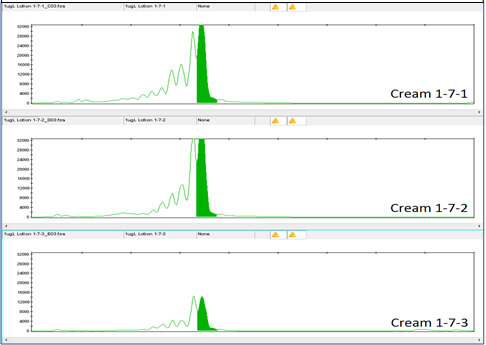
The DNA tag was easily detected when the creams were diluted 1 million-fold and the DNA tag was present at the lowest concentration in the Concentrated Aloe barbadensis Leaf Juice Powder (1X).
aloe cream authenticity verification
Figure 4

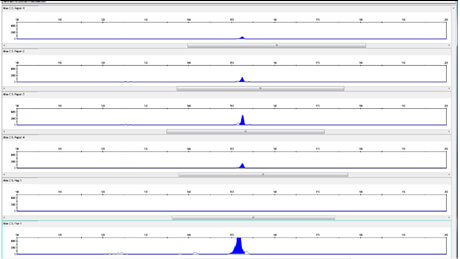
Figure 4 shows the DNA results for the 1 million-fold dilution of Day Cream A tagged with Concentrated Aloe barbadensis Leaf Juice Powder containing the lowest concentration of DNA tag, 1X Concentration.
aloe cream authenticity verification
Figure 5

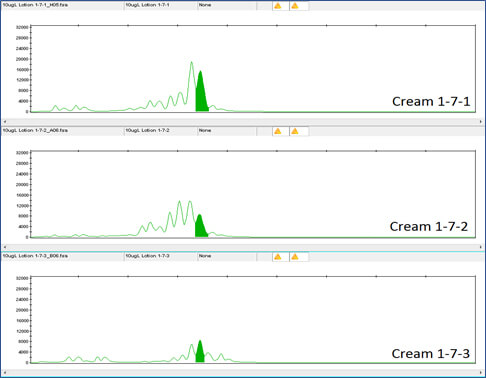
Figure 5 shows the DNA results for the 1 million-fold dilution of Day Cream A with Concentrated Aloe barbadensis Leaf Juice Powder containing the lowest concentration of DNA tag, at 10X Concentration.

Clearly the DNA tag is reliably detectable even at this low concentration. DNA detection at this low level was also true for the DNA tags in Night Cream and Rescue Cream (see Figures 6, 7, 8 and 9).
aloe cream authenticity verification
Figure 6

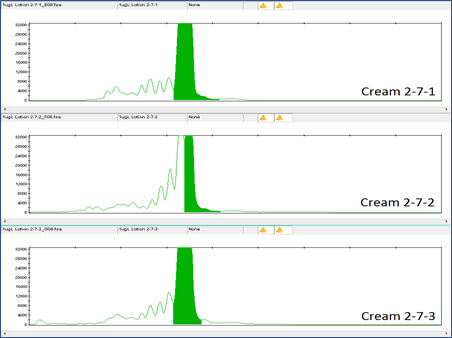
Figure 6 shows the equivalent data for Night Cream B, demonstrating the DNA results for the 1 million-fold dilution of Night Cream B with Concentrated Aloe barbadensis Leaf Juice Powder containing DNA tag at 1X Concentration.
aloe cream authenticity verification
Figure 7

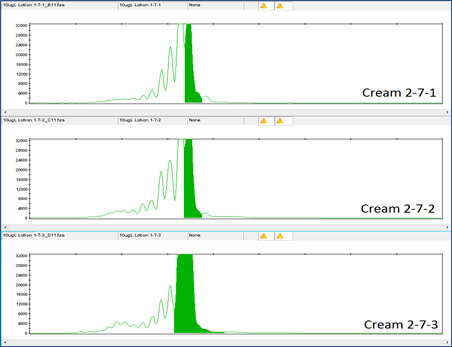
Figure 7 shows the DNA results for the 1 million-fold dilution of Night Cream B tagged with Concentrated Aloe barbadensis Leaf Juice Powder containing the lowest concentration of DNA tag, 10X Concentration.
DNA results of 1 million-fold dilution in Rescue Cream
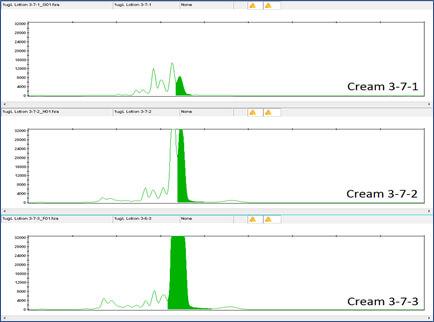
Figure 8: DNA results of 1 million-fold dilution in Rescue Cream (1X Concentration)

Figure 8 shows the DNA results for the 1 million-fold dilution of Rescue Cream tagged with Concentrated Aloe barbadensis Leaf Juice Powder containing the DNA tag at 1X Concentration.
aloe cream authenticity verification chart
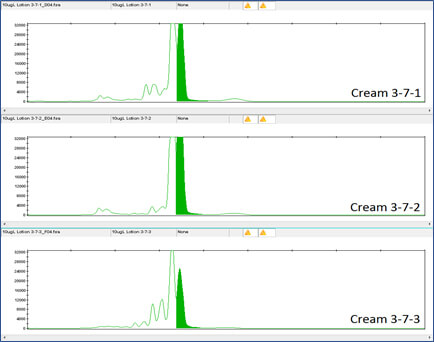
Figure 9

Figure 9 shows the DNA results for the 1 million-fold dilution of Rescue Cream with Concentrated Aloe barbadensis Leaf Juice Powder containing the lowest concentration of DNA tag, 10X Concentration.

Conclusion
The data presented in this paper show that the BCOL cannot be relied upon as a marker for Aloe vera in all personal care products. DNA molecular tags, when added to Aloe Barbadensis Leaf Juice Powder, remain easily detectable even when the DNA tags were added to Aloe Barbadensis Leaf Juice Powder at 1µg DNA /kg, the DNA tagged Aloe Barbadensis Leaf Juice Powder was then included in the creams at 1% and the creams were further diluted up to 1 million-fold. The BCOL testing results reported in this study show BCOL DNA is (mostly) undetectable in finished goods, and SigNature DNA tags are detectable even after 1 million-fold dilution.Discussion

How should we determine the presence of botanicals in complex formulas? Are the analytical techniques currently recommended for detecting Aloe vera reliable? What is the truth?

How should we determine the presence of botanicals in complex formulas? Our results clearly show that DNA tags can be reliably used to tag Aloe Barbadensis Leaf Juice Powder and remain easily detectable in the complex skin cream even when diluted to 1 million-fold. Looking at the strength of the signals at the added DNA tags at their lowest dilution, in all three products suggests strongly that the DNA tags are likely to be reliably detected at dilutions far greater than to 1 million-fold. Just as we would not set out on a journey without having a luggage label on our suitcase, it makes perfect sense to add unique DNA tags to raw materials about to journey through the supply chain. Once tagged, it is easy to determine the presence of Aloe vera (or for that matter, other botanicals) in complex formulas – not just in the personal care creams formulas described in this paper but, as the DNA tags are suitable for use in pharma and food, for a whole range of consumer products including botanicals such as ginseng, St. John’s wort, echinacea and garlic in health food supplements.

Are the analytical techniques currently recommended to detecting Aloe vera reliable? The data presented in this paper show two products made using Aloe Barbadensis Leaf Juice Powder or Aloe Barbadensis Leaf Juice that the BCOL was detectable on only 25% of the tests. This poor performance could be due to several reasons, many of which are covered in the review by Parveen et al., (2016), which gives an overview on the strengths and limitations of DNA barcoding techniques for botanical ingredient identification. Based on the available information, these authors also do not recommend the use of BCOL as a sole means of species identification. Unlike the tiny DNA tags, the BCOL is a large molecule that is far more susceptible to breakdown by nuclease and chemical degradation or lost through nonspecific binding. It therefore cannot be relied upon as the sole identifier of Aloe vera in products. Unpublished data from Applied DNA Sciences’ laboratories on BCOL for cotton supports the findings for Aloe vera and shows that the BCOL is not always suitable for the Cotton Supply Chain and by inference is not really suitable for Natural Product Supply chains in general (Michael Hogan, Private Communication, 2017).

Acemannan is the traditionally recommended biochemical identifier for Aloe vera in extracts and products. This naturally occurring polysaccharide is considered unique to Aloe vera, where it is found mainly in Aloe vera leaf and Aloe vera juice. Other biochemical markers are used in conjunction with acemannan for Aloe vera identification because acemannan is known to break down in extracts. These supporting biochemical markers are not unique to Aloe vera and are commonly found in many other botanicals. For example, D-isocitrate, which is known as Aloe whole leaf marker or WLM, is also used as a marker to judge the quality of fruit products, including citrus juices. Orange juice is considered authentic when the ratio of citric acid to D-isocitrate is less than 130. A D-isocitrate ratio higher than 130 indicates that the orange juice may have been adulterated. D-Isocitrate therefore is not a unique identifier for Aloe vera. When asked, most experts agree that acemannan is a difficult molecule to measure in Aloe vera extracts and is even harder to detect in cosmetic formulas. Chemists must employ specialized H NMR techniques, which are expensive and are not considered as general laboratory equipment. Acemannan is unstable at high temperatures. It is liable to enzymic degradation and it is readily fermentable. Acemannan is therefore very likely to be degraded in extracts and products during storage and processing, especially if control standards are poor. Scientists working at Nestle Research Center in Switzerland used acemannan and its related products in a survey of nine commercial Aloe vera gel powders from leading international suppliers. They found the quality was very inconsistent and found that only three contained satisfactory amounts of acemannan. The industry recognises that post-harvest handling has a direct impact on the quality and marketability of Aloe vera. To help control Aloe vera quality, the International Aloe Science Council (IASC) issues Facility Certification after on‐site inspection by an authorized IASC auditor (or by a correspondence audit of facilities that maintain current, IASC approved 3rd party certifications as well as meeting all other applicable requirements). The IASC quality standard for Aloe vera raw materials, covers constituents such as polysaccharide content, D-isocitrate, and the other constituents typically found in Aloe vera. It is interesting to note that the IASC aloe vera quality standard is applicable only to raw material ingredients for use in products for oral consumption. This standard is not applicable to finished products nor to raw materials intended for use in finished products for topical use.

DNA molecular tags can enable Aloe vera to be forensically traced and tracked from the raw aloe leaves to the end-product. Tracing molecular tags can prove provenance as against paper audit trails which are very vulnerable to corruption.


Identifying Uzbek Cotton Biomarkers: A Proposed Collaborative Framework to Eliminate Forced Labor

Posted on

Genetic markers for regional cultivars persist in cotton fibers and can be detected in our proprietary assay

Stony Brook, NY. February 27, 2017 — Applied DNA Sciences announced today that it has identified lead genetic markers that are unique to certain cotton cultivars grown in Uzbekistan, where forced human labor is used to cultivate the cotton. To date, the biomarkers have been tested in raw and ginned cotton. The testing of yarn and finished textiles is forthcoming.

Applied DNA is looking for partners to aid in halting forced labor in cotton fields, while facilitating a global collaboration in identifying and highlighting Uzbek cottons that are harvested by modern machinery specifically without forced labor.

The Company offers a molecular tagging and authentication service to brands and retailers who want to exclude adulteration by forensically proving the origin of their cotton. The platform is based on a unique molecular tag, known as “SigNature® T”, applied at the point where locally grown cotton is ginned, and forensically authenticated at each stage of the supply chain to allow traceability for fibers to finished goods back to their origin. To date, multiple brands and retailers have SigNature T-tagged over 150 million pounds of US-grown cotton.

Applied DNA proposes that machine harvesting and modern ginning be introduced to the Uzbek cotton industry as soon as possible, perhaps funded by governments, NGOs and the global cotton industry. Molecular markers supplied by the company could ensure that every relevant fiber is recognizable as free of forced labor. In collaboration with leaders within the cotton industry and cotton research, Uzbek cotton fibers could be introduced to the global market as a superior upland cotton, untainted by ethical compromise.

Said Dr. James Hayward, President and CEO of Applied DNA: “Even if a retailer’s brand were surreptitiously adulterated with Uzbek cotton, the damage to their equity would be irreparable. When combined with a program of molecular tagging at the source, our products and services can de-risk supply chains for every cotton retailer, brand and manufacturer.”

According to the Cotton Campaign, every year the Uzbek government forces more than a million Uzbek citizens — including teachers, doctors and nurses — to work long hours picking cotton for state-run industries under threat of penalties, including loss of their jobs or education. The government of Uzbekistan operates the largest forced-labor system of cotton production in the world. There is no region in Uzbekistan excluded from this system, so no Uzbek cotton is free from forced labor.

Kirill Boychenko, Coordinator of the Cotton Campaign at the International Labor Rights Forum, stated: “DNA technology can help businesses and regulators enhance traceability and transparency in global supply chains. Applied DNA’s advances in molecular tagging and cotton genotyping can provide technical guidance on cotton produced with forced labor from countries like Uzbekistan and Turkmenistan that can then be used by brands, retailers, supply chain intermediaries and law enforcement to ensure responsible sourcing.”

More than 250 brands and retailers have signed, “The Cotton Pledge,” promising not to knowingly source cotton from Uzbekistan. Growing consciousness of unethically-produced cotton among consumers is apparent in the results of a recent Harris Poll: roughly three in five Americans (61%) say if they discovered a brand made their bedding/clothing products from raw cotton that was picked by child/forced laborers, they would no longer purchase from that brand.

The United States recognizes Uzbek cotton as a product made with forced labor and has stopped goods made with Uzbek cotton at the border under a law prohibiting import of goods made with forced labor. The California Transparency in Supply Chain Act requires businesses to report their efforts to combat forced labor in their supply chains. The Modern Slavery Act in the United Kingdom requires businesses that trade in at least £36 million in goods a year to report what steps, if any, they are taking to address forced labor in their supply chains. Until today, however, there has been no mechanism to discriminate fibers of Uzbek origin.Andrew Wallis, OBE, the catalyst behind the Modern Slavery Act, and Founder and CEO of Unseen, a UK charity that works towards a world without forced labor stated: “The innovative use of technology by Applied DNA Sciences to tackling some of the world’s most complex problems – transparency in supply chains and modern forced-labor abuses – is to be applauded.”

Earlier this month, the French Parliament adopted a much-awaited law, which applies only to French companies, enforcing a “public vigilance” for corporations of their supply chains, for human rights and the environment. Similar laws are under consideration in Switzerland and the Netherlands.

Uzbekistan is one of the largest exporters of cotton; sixth in the global economy. The countries that import the largest quantities of Uzbek cotton are also the countries that rank among the largest suppliers of finished textiles to the USA and UK, such as Bangladesh and China.

Hidden labor rights abuses in global supply chains are increasingly being scrutinized by consumers, governments and intergovernmental organizations. It can be challenging for global brands to determine potential risks at every stage of the complex supply chains inherent in goods produced with cotton. This new technology offers companies aiming to minimize risk an opportunity for ensuring cotton made with forced labor from Uzbekistan does not slip into the goods they buy and produce.

Recently, in a report submitted by the International Labour Organization (ILO), a United Nations Agency, to the World Bank, third-party observations made clear that progress against forced labor in Uzbekistan is making significant strides. Uzbekistan has phased-out organized child labor, and the “risk has been reduced to the point where child labour (sic) has become socially unacceptable.” However, forced labor does remain a risk for higher-level students, the staff of public and private agencies, and the staff of medical facilities.

About Applied DNA Sciences
Applied DNA Sciences makes life real and safe by providing biotechnology-driven solutions to help protect products, brands, entire supply chains, and intellectual property of companies, governments and consumers from theft, counterfeiting, fraud and diversion. Patented botanical DNA solutions can be used to identify, tag, track, and trace products, to help assure authenticity, traceability and quality of products. SigNature DNA is at the heart of a family of uncopyable, security and authentication solutions such as SigNature® T and fiberTyping®, targeted toward textiles and apparel, DNAnet®, for anti-theft and loss prevention, and digitalDNA®, providing powerful track and trace. All provide a forensic chain of evidence, and can be used to prosecute perpetrators.

Go to adnas.com for more information, events and to learn more about how Applied DNA Sciences makes life real and safe. Common stock listed on NASDAQ under the symbol APDN, and warrants are listed under the symbol APDNW.

Forward-Looking Statements
The statements made by APDN in this press release may be “forward-looking” in nature within the meaning of the Private Securities Litigation Act of 1995. Forward-looking statements describe APDN’s future plans, projections, strategies and expectations, and are based on assumptions and involve a number of risks and uncertainties, many of which are beyond the control of APDN. Actual results could differ materially from those projected due to our short operating history, limited financial resources, limited market acceptance, market competition and various other factors detailed from time to time in APDN’s SEC reports and filings, including our Annual Report on Form 10-K filed on December 6, 2016, and our subsequent quarterly report on Form 10-Q filed on February 9, 2017, which are available at www.sec.gov. APDN undertakes no obligation to update publicly any forward-looking statements to reflect new information, events or circumstances after the date hereof to reflect the occurrence of unanticipated events, unless otherwise required by law.

Applied DNA Sciences Expands Patent Portfolio

Posted on

New patents applicable to a broad range of markets, including pharmaceuticals and industrial products, among others

STONY BROOK, NY. February 21, 2017 – Applied DNA Sciences, Inc. (“Applied DNA”) (NASDAQ: APDN) a provider of DNA-based supply-chain, anti-counterfeiting and anti-theft technology, product genotyping and product authentication solutions, is proud to announce a significant expansion of its U.S. and Global patent portfolio in 2016, demonstrating its ongoing commitment to innovation and leadership in the marketplace.

Applied DNA’s U.S. and Global patent portfolio now totals 44 issued patents, with 84 applications pending. In 2016, Applied DNA was granted U.S. Patent Nos. 9,266,370, 9,290,819, 9,297,032, 9,412,284 and Canadian Patent No, 2,713,101. These newly issued patents provide broad long term protection for Applied DNA’s core business verticals, including its fiberTyping®, SigNature® DNA, SigNature® T and BackTrac® platforms, as well as its bulk DNA production services.

U.S. Patent 9,290,819 is based upon Applied DNA’s ground-breaking research in the genotyping of mature cotton fibers and provides strong protection of Applied DNA’s fiberTyping services currently utilized by major U.S. retailers and brands as well as SigNature T supply chain partners. U.S. Patents 9,266,370 and 9,297,032 provide further protection for Applied DNA’s SigNature DNA molecular taggant and the SigNature T platform, and their use in a broad range of markets, including, pharmaceuticals, consumer products, industrial materials, printing, and electronics. U.S. Patent 9,412,284 is the first in a new family of patents that protects the encoding and decoding of information within the 2-diminsional curves of a pattern, such as a military camouflage pattern. Canadian Patent No, 2,713,101 extends Applied DNA’s protection of its unique bulk DNA production apparatus and methods to Canada.

Dr. James Hayward, president and CEO of Applied DNA, stated, “The continuous development of our intellectual property to advance the commercial adoption of our core technology platform, SigNature DNA, is central to our business model. These new patents and others under examination underpin our penetration of core business verticals with an uncopyable and unbreakable mark that can reduce risk and uncertainty across global supply chains. Our intellectual property estate is among our most valuable assets and we will look to further leverage this asset in the future.”

Clay D. Shorrock, Esq., General Counsel for Applied DNA, stated:  “Our commitment to innovation underpins our patent portfolio’s strong growth in 2016. Our patents continue to validate our core technologies and confer a significant competitive advantage to the company. As we continue to innovate across our business lines, our patent portfolio is well positioned for substantial growth in 2017 and beyond.”

About Applied DNA Sciences
Applied DNA Sciences makes life real and safe by providing biotechnology-driven solutions to help protect products, brands, entire supply chains, and intellectual property of companies, governments and consumers from theft, counterfeiting, fraud and diversion. Patented botanical DNA solutions can be used to identify, tag, track, and trace products, to help assure authenticity, traceability and quality of products. SigNature DNA is at the heart of a family of uncopyable, security and authentication solutions such as SigNature® T and fiberTyping®, targeted toward textiles and apparel, DNAnet®, for anti-theft and loss prevention, and digitalDNA®, providing powerful track and trace. All provide a forensic chain of evidence, and can be used to prosecute perpetrators.

Go to adnas.com for more information, events and to learn more about how Applied DNA Sciences makes life real and safe. Common stock listed on NASDAQ under the symbol APDN, and warrants are listed under the symbol APDNW.

Forward-Looking Statements
The statements made by APDN in this press release may be “forward-looking” in nature within the meaning of the Private Securities Litigation Act of 1995. Forward-looking statements describe APDN’s future plans, projections, strategies and expectations, and are based on assumptions and involve a number of risks and uncertainties, many of which are beyond the control of APDN. Actual results could differ materially from those projected due to our short operating history, limited financial resources, limited market acceptance, market competition and various other factors detailed from time to time in APDN’s SEC reports and filings, including our Annual Report on Form 10-K filed on December 6, 2016, and our subsequent quarterly report on Form 10-Q filed on February 9, 2017, which are available at www.sec.gov. APDN undertakes no obligation to update publicly any forward-looking statements to reflect new information, events or circumstances after the date hereof to reflect the occurrence of unanticipated events, unless otherwise required by law.

APDN’s Recurring Revenue in Synthetic Fiber Market with 3rd PO

Posted on

Order Evidences Continuing Maturation and Penetration of Broader Textile Opportunity; Applied DNA’s Molecular Tags Enable Verification of Synthetic Fiber Quality

STONY BROOK, NY. February 14, 2017 – Applied DNA Sciences delivered its third shipment against continuing purchase orders for molecular tags used to protect supply chains for polyethylene terephthalate (PET) man-made fibers (MMF) from master batch to finished goods.  With recurring, non-seasonal orders, this synthetics supply chain experience has accelerated contract discussions in progress with other MMF segment manufacturers.

“Molecular tags can be used to track high-quality and high-performance grades of PET, where the specifications are demanding”, said Dr. James Hayward, president and CEO of Applied DNA.  “Unlike paper or electronic certificates, these ‘molecular certificates™’ carry the identifying unalterable information in or on the product, thereby providing assurances to governments, and consumers alike. Recycled PET can be verified by the molecular certificate infused within the polymer after the recycling process” he continued. “PET is just one of several polymer families we expect to productize in FY2017.”

Concluded Dr. Hayward, “This purchase order highlights continued execution on our strategy to diversify our revenue stream and improve revenue predictability on an annual basis. Together with the recent announcement that Applied DNA will provide SigNature® T DNA products and authentication services to empower textile supply chain security over an extended multi-year period with annual revenue minimums, and a growing asset marking business for automobiles in Europe, our efforts to expand market awareness and drive adoption of our DNA solutions are bearing fruit.”

Applied DNA’s entry into the MMF category complements the company’s growing success in cotton fibers, in which the company has tagged approximately 150 million pounds.  The Total Addressable Market (TAM) worldwide for MMFs is roughly 3 times the size of the TAM for cotton. (Chemical Economics Handbook, 2015)PET has many commercial uses, is available in many grades of quality and performance, and finds applications in medical devices, automotive components, solar cells, bottling and packaging. It is the fourth most-produced polymer globally. When applied in textiles, it is often referred to as “polyester”.

PET is one of the most recyclable plastics, a quality that is emphasized in the sustainability strategies of many large manufacturers and global brands, and in the “Circular Economy”, a concept being adopted by many commercial and geopolitical ecosystems.

In June 2016, Applied DNA announced the deployment of molecular tags in synthetic fibers during early pilots, which were deemed successful. MeiLin Wan, Applied DNA’s Vice President for Textiles said: “Success with one class of MMFs speeds our time-to-market in other synthetic categories. Molecular tags can assure consumers of apparel, foods, and bottled drinks that their purchases are environmentally and ethically sound.”

About Applied DNA Sciences
Applied DNA Sciences makes life real and safe by providing biotechnology-driven solutions to help protect products, brands, entire supply chains, and intellectual property of companies, governments and consumers from theft, counterfeiting, fraud and diversion. Patented botanical DNA solutions can be used to identify, tag, track, and trace products, to help assure authenticity, traceability and quality of products. SigNature DNA is at the heart of a family of uncopyable, security and authentication solutions such as SigNature® T and fiberTyping®, targeted toward textiles and apparel, DNAnet®, for anti-theft and loss prevention, and digitalDNA®, providing powerful track and trace. All provide a forensic chain of evidence, and can be used to prosecute perpetrators.

Go to adnas.com for more information, events and to learn more about how Applied DNA Sciences makes life real and safe. Common stock listed on NASDAQ under the symbol APDN, and warrants are listed under the symbol APDNW.

Forward-Looking Statements
The statements made by APDN in this press release may be “forward-looking” in nature within the meaning of the Private Securities Litigation Act of 1995. Forward-looking statements describe APDN’s future plans, projections, strategies and expectations, and are based on assumptions and involve a number of risks and uncertainties, many of which are beyond the control of APDN. Actual results could differ materially from those projected due to our short operating history, limited financial resources, limited market acceptance, market competition and various other factors detailed from time to time in APDN’s SEC reports and filings, including our Annual Report on Form 10-K filed on December 6, 2016, and our subsequent quarterly report on Form 10-Q filed on February 9, 2017, which are available at www.sec.gov. APDN undertakes no obligation to update publicly any forward-looking statements to reflect new information, events or circumstances after the date hereof to reflect the occurrence of unanticipated events, unless otherwise required by law.

APDN Reports Fiscal First Quarter 2017 Financial Results

Posted on

Company to Hold Conference Call and Webcast Today at 4:30 PM Eastern Time

STONY BROOK, NY. February 9, 2017 – Applied DNA Sciences announced financial results for the fiscal 2017 first quarter ended December 31, 2016.

“Our fiscal first quarter results reflect variability in the recognition of our deferred cotton revenue due to the timing of commitments in our textile business that masks an expansion in our base of business over the prior quarter,” stated Dr. James Hayward, president and CEO of Applied DNA. “During the quarter, we shipped SigNature® T to mark a new premium cotton varietal and subsequent to quarter end, on-boarded a seventh U.S. gin. We expect commitments for marked cotton utilizing taggant shipped during the fourth fiscal quarter of 2016 to allow for the release of more deferred revenues in the current quarter as well as the remainder of fiscal 2017. We also began to mark synthetic fiber with Techmer for use in the automotive industry and initiated a pilot project in an adjacent market that addresses the issues of dilution and diversion in the fertilizer industry’s supply chain.”

First Quarter Financial Highlights:

  • Revenues decreased 32% for the first quarter of fiscal 2017 to $903 thousand, compared with $1.32 million reported in the first quarter of fiscal 2016, and decreased 45% from the $1.64 million reported in the fourth fiscal quarter ended September 30, 2016. The year-over-year decrease in revenue is primarily attributable to a decrease in two government contract awards which both expired last quarter.
  • Total operating expenses were $4.6 million, compared with $4.1 million in the prior year’s quarter, an increase of approximately $460 thousand or 11%. The increase in year-over-year total operating expenses is primarily attributable to an increase in SG&A primarily associated with stock option grants offset by decreases in legal and accounting fees, R&D expenses and decreased amortization and depreciation.
  • Net loss for the quarter ended December 31, 2016 was $4.0 million, or $0.16 per share, compared with a net loss of $2.9 million, or $0.13 per share for the quarter ended December 31, 2015 and a net loss of $2.4 million, or $0.10 per share for the quarter ended September 30, 2016.
  • Excluding non-cash expenses, Adjusted EBITDA for the quarter ended December 31, 2016 was negative $2.3 million compared to a negative Adjusted EBITDA of $2.2 million for the same quarter last year and a negative Adjusted EBITDA of $1.7 million in the prior fiscal quarter due mainly to a decrease in revenues. See below for information regarding non-GAAP measures.
  • Cash and cash equivalents as of December 31, 2016 totaled $6.7 million as compared to $4.5 million at September 30, 2016. The increase in cash balances is due primarily to a private placement completed last November 2016 which netted $4.3 million.
  • Net cash used in operating activities in the fiscal first quarter of 2017 was $2.1 million. This compares with $2.7 million the corresponding prior-year period.

“We made steady progress in the quarter to expand our penetration of business verticals with near-term drivers of growth while building our recurring revenue stream,” continued Dr. Hayward. “In the most visible sign of market adoption of SigNature T DNA to date, through one of our partners, we will provide SigNature T DNA to a prominent North American retailer over a multi-year period. This agreement represents the maturing of our cotton business, giving us for the first time revenue certainty on an annual basis beginning with the 2017 ginning season. In our asset marking vertical, the largest auto insurance company in Scandinavia has begun to actively promote our SmartDNA® marking kit to policy holders of a second auto brand. Growing market adoption by these and other key business verticals, we believe, sets the stage for greater and more diversified revenue opportunities.”

Operational Highlights:

  • On January 24, 2017, the Company appointed Former New York Police Department and current K2Intelligence Vice-Chairman Ray Kelly to its Strategic Advisory Board (SAB). At K2Intelligence, Mr. Kelly provides valuable insight into the design and development of tailored enterprise risk solutions and investigates internal and external risks affecting the safety of client assets and the reputation and stability of their key stakeholders. Mr. Kelly’s deep experience in security and law enforcement will help to guide Applied DNA’s efforts in further penetrating its Home Asset Valuables Marking and Cash and Valuable in Transit business verticals.
  • On January 18, 2017, Applied DNA announced the results of a cotton survey conducted by Harris Poll that indicated that consumer buying decisions are increasingly linked to authentic practices promised by brands. The survey shows that 78% of Americans would likely buy brands that showed scientific proof of product claims (100% organic, 100% Pima cotton, etc.) over ones that did not. The findings validate the value proposition of SigNature T DNA mark to eliminate concerns over origin, diversion, any mislabeling, and any counterfeiting that can take place throughout the cotton supply chain. For additional information on the cotton survey, please click here.
  • On January 4, 2017, the Company appointed PepsiCo Vice Chairman and Chief Scientific Officer of Global Research and Development Dr. Mehmood Khan to its SAB. Dr. Khan’s decades of involvement in the global food, beverage and pharmaceutical industries, as well as his depth of scientific innovation experience, are well suited to complement Applied DNA’s penetration of its new vertical markets.
  • On December 14, 2016, Applied DNA announced that it will provide its SigNature T DNA products and services platform to empower textile supply chain security for one of the largest U.S.-based retailers over an extended multi-year period with established revenue thresholds.
  • On December 7, 2016, the Company announced that revenues from the DNA marking of European luxury automobiles are expected to increase in fiscal 2017 from approximately $500,000 in fiscal 2016. Applied DNA attributes the expected increase to the promotion of its SmartDNA® product by a Scandinavian car manufacturer to its more than one million customers.

Concluded Dr. Hayward, “As growing market awareness converts into adoption, the value proposition of SigNature T DNA has attracted individuals to the Company whose cumulative industry expertise and business acumen can help shape our growth and open new avenues for business development. Dr. Mehmood Khan, vice-chairman of PepsiCo, and Ray Kelly, former Commissioner of the New York Police Department, will add valuable insight into our business strategy as we build our base of business across key verticals. Together with the opportunities ahead of us and the financial resources with which to pursue them, we believe Applied DNA Sciences is well positioned to succeed.”

Fiscal 2017 First Quarter Conference Call Information
The Company will hold a conference call and webcast to discuss its fiscal 2017 first quarter results on Thursday February 9, 2017 at 4:30 PM EST. To participate on the conference call, please follow the instructions below. While every attempt will be made to answer investors’ questions on the Q&A portion of the call, due to the large number of expected participants, not all questions may be answered.

To Participate:

  • Participant Toll Free: 1-844-887-9402
  • Participant Toll: 1-412-317-6798
  • Please ask to be joined to the Applied DNA Sciences earnings call

Live webcast: http://services.choruscall.com/links/apdn170209.html

Replay (available 1 hour following the conclusion of the live call):

Information about Non-GAAP Financial Measures
As used herein, “GAAP” refers to accounting principles generally accepted in the United States of America. To supplement our condensed consolidated financial statements prepared and presented in accordance with GAAP, this earnings release includes Adjusted EBITDA, which is a non-GAAP financial measure as defined in Rule 101 of Regulation G promulgated by the Securities and Exchange Commission. Generally, a non-GAAP financial measure is a numerical measure of a company’s historical or future performance, financial position, or cash flows that either excludes or includes amounts that are not normally excluded or included in the most directly comparable measure calculated and presented in accordance with GAAP.The presentation of this non-GAAP financial information is not intended to be considered in isolation or as a substitute for, or superior to, the financial information prepared and presented in accordance with GAAP. We use this non-GAAP financial measure for internal financial and operational decision making purposes and as a means to evaluate period-to-period comparisons of the performance and results of operations of our core business. Our management believes that these non-GAAP financial measures provide meaningful supplemental information regarding the performance of our business by excluding non-cash expenses that may not be indicative of our recurring operating results. We believe this non-GAAP financial measure is useful to investors as it allows for greater transparency with respect to key metrics used by management in its financial and operational decision making.

“EBITDA”- is defined as earnings (loss) before interest expense, income tax expense and depreciation and amortization expense.

“Adjusted EBITDA”- is defined as EBITDA adjusted to exclude (i) stock-based compensation and (ii) other non-cash expenses.

About Applied DNA Sciences
Applied DNA Sciences makes life real and safe by providing biotechnology-driven solutions to help protect products, brands, entire supply chains, and intellectual property of companies, governments and consumers from theft, counterfeiting, fraud and diversion. Patented botanical DNA solutions can be used to identify, tag, track, and trace products, to help assure authenticity, traceability and quality of products. SigNature DNA is at the heart of a family of uncopyable, security and authentication solutions such as SigNature® T and fiberTyping®, targeted toward textiles and apparel, DNAnet®, for anti-theft and loss prevention, and digitalDNA®, providing powerful track and trace. All provide a forensic chain of evidence, and can be used to prosecute perpetrators.

Go to adnas.com for more information, events and to learn more about how Applied DNA Sciences makes life real and safe. Common stock listed on NASDAQ under the symbol APDN, and warrants are listed under the symbol APDNW.

Forward-Looking Statements
The statements made by APDN in this press release may be “forward-looking” in nature within the meaning of the Private Securities Litigation Act of 1995. Forward-looking statements describe APDN’s future plans, projections, strategies and expectations, and are based on assumptions and involve a number of risks and uncertainties, many of which are beyond the control of APDN. Actual results could differ materially from those projected due to our short operating history, limited financial resources, limited market acceptance, market competition and various other factors detailed from time to time in APDN’s SEC reports and filings, including our Annual Report on Form 10-K filed on December 6, 2016, which is available at www.sec.gov. APDN undertakes no obligation to update publicly any forward-looking statements to reflect new information, events or circumstances after the date hereof to reflect the occurrence of unanticipated events, unless otherwise required by law.

APPLIED DNA SCIENCES, INC. CONDENSED CONSOLIDATED BALANCE SHEETS

December 31, 2016 (unaudited)September 30, 2016
16Assets
Current assets
Cash and cash equivalents
6,701,5864,479,274
Accounts receivable, net of allowance of $23,411 and $32,965 at December 31, 2016 and September 30, 2016, respectively6,156,1736,374,895
Inventories323,324297,759
Prepaid expenses and other current assets133,230200,006
Total current assets13,314,31311,351,934
Property, plant and equipment-net of accumulated depreciation of $1,363,789 and $1,263,200 at December 31, 2016 and September 30, 2016, respectively723,790792,499
Other assets:
Long term accounts receivables920,0001,535,000
Deposits61,62661,126
Deferred offering costs13,986
Goodwill285,386285,386
Intangible assets, net of accumulated amortization of $485,037 and $423,649, as of December 31, 2016 and September 30, 2016, respectively1,464,5121,525,900
Total Assets16,769,62715,565,831
LIABILITIES AND STOCKHOLDERS’ EQUITY
Current liabilities:
Accounts payable and accrued liabilities2,201,0212,247,341
Deferred revenue1,791,7071,837,588
Total current liabilities3,992,7284,084,929

Long term accounts payable

127,000215,500
Long term deferred revenue468,000900,000
   
Total liabilities4,587,7285,200,429
Commitments and contingencies
Stockholders’ Equity
Preferred stock, par value $0.001 per share; 10,000,000 shares authorized; -0- shares issued and outstanding as of December 31, 2016 and September 30, 2016
Series A Preferred stock, par value $0.001 per share; 10,000,000 shares authorized; -0- issued and outstanding as of as of December 31, 2016 and September 30, 2016
Series B Preferred stock, par value $0.001 per share; 10,000,000 shares authorized; -0- issued and outstanding as of December 31, 2016 and September 30, 2016
Common stock, par value $0.001 per share; 500,000,000 shares authorized; 26,351,483 and 24,078,756 shares issued and outstanding as of December 31, 2016 and September 30, 2016, respectively26,35124,079
Additional paid in capital239,934,320234,158,711
Accumulated deficit(227,778,772)(223,817,388)
Total stockholders’ equity12,181,89910,365,402
Total Liabilities and Stockholders’ Equity16,769,62715,565,831

APPLIED DNA SCIENCES, INC. CONDENSED CONSOLIDATED STATEMENTS OF OPERATIONS (Unaudited)

Three Months Ended December 31, 2016Three Months Ended December 31, 2015
Revenues:  
Product revenues704,417693,214
Service revenues198,591630,900
   
Total revenues903,0081,324,114
   
   
Cost of revenues274,832184,268
   
Operating expenses:  
Selling, general and administrative3,900,9173,169,063
Research and development518,628672,965
Depreciation and amortization161,977218,346
   
Total operating expenses4,581,5224,060,374
   
LOSS FROM OPERATIONS(3,953,346(2,920,528
   
Other income (expense):  
Interest income (expense), net1,3312,845
Other income (expense), net(9,369)(8,587
   
Loss before provision for income taxes(3,961,384(2,926,270
   
Provision for income taxes
   
   
NET LOSS(3,961,384)(2,926,270)
   
Net loss per share-basic and diluted(0.16)(0.13)
   
Weighted average shares outstanding- Basic and diluted25,427,40722,542,176

APPLIED DNA SCIENCES, INC. CALCULATION AND RECONCILIATION OF ADJUSTED EBITDA

 Three Months Ended December 31, 2016Three Months Ended December 31, 2015
   
Net Loss $ (3,961,384) $ (2,926,270)
   
Interest (income) expense, net(2,845)
Depreciation and amortization218,346
Stock based compensation expense455,111
Bad debt expense5,64610,000
   
Total non-cash items1,624,312680,612
   
Consolidated Adjusted EBITDA (loss) (2,337,072)(2,245,658)

APDN Schedules Fiscal 2017 First Quarter Financial Results Conference Call and Webcast

Posted on

For February 9, 2017 at 4:30 PM ET

STONY BROOK, N.Y., January 23, 2017. Applied DNA Sciences will host an investor call and simultaneous webcast on Thursday, February 9, 2017 at 4:30 PM ET to discuss its fiscal 2017 first quarter financial results.

Dr. James Hayward, president and CEO, and Beth Jantzen, CFO, plan to discuss the company’s performance and achievements for the quarter and outline key ongoing business initiatives for the balance of the 2017 fiscal year. Management’s commentary will be followed by a question-and-answer session. The investor call and webcast will be accompanied by a PowerPoint presentation, which will be made available on the company’s website at the start of the call.

Due to the large number of expected participants, not all questions may be answered on the call. For those investors unable to attend the live call, call replay and webcast information is provided below.

To Participate:
• Participant Toll Free: 1-844-887-9402
• Participant Toll: 1-412-317-6798
• Please ask to be joined to the Applied DNA Sciences earnings call
• Live webcast: http://services.choruscall.com/links/apdn170209.html

Replay (available 1 hour following the conclusion of the live call):
• Participant Toll Free: 1-877-344-7529
• Participant Toll: 1-412-317-0088
• Participant Passcode: 10098826
• Webcast replay: https://services.choruscall.com/ccforms/replay.html

About Applied DNA Sciences
Applied DNA Sciences makes life real and safe by providing biotechnology-driven solutions to help protect products, brands, entire supply chains, and intellectual property of companies, governments and consumers from theft, counterfeiting, fraud and diversion. Patented botanical DNA solutions can be used to identify, tag, track, and trace products, to help assure authenticity, traceability and quality of products. SigNature DNA is at the heart of a family of uncopyable, security and authentication solutions such as SigNature® T and fiberTyping®, targeted toward textiles and apparel, DNAnet®, for anti-theft and loss prevention, and digitalDNA®, providing powerful track and trace. All provide a forensic chain of evidence, and can be used to prosecute perpetrators..

Go to adnas.com for more information, events and to learn more about how Applied DNA Sciences makes life real and safe. Common stock listed on NASDAQ under the symbol APDN, and warrants are listed under the symbol APDNW.

Forward-Looking Statements
The statements made by APDN in this press release may be “forward-looking” in nature within the meaning of the Private Securities Litigation Act of 1995. Forward-looking statements describe APDN’s future plans, projections, strategies and expectations, and are based on assumptions and involve a number of risks and uncertainties, many of which are beyond the control of APDN. Actual results could differ materially from those projected due to our short operating history, limited financial resources, limited market acceptance, market competition and various other factors detailed from time to time in APDN’s SEC reports and filings, including our Annual Report on Form 10-K filed on December 6, 2016, which is available at www.sec.gov. APDN undertakes no obligation to update publicly any forward-looking statements to reflect new information, events or circumstances after the date hereof to reflect the occurrence of unanticipated events, unless otherwise required by law.

American Consumers to Manufacturers: It better be 100% what you say it is or we are not buying, especially if it involves child or forced labor

Posted on

Applied DNA Sciences cotton survey conducted by Harris Poll reveals 30% of consumers say they would stop purchasing a brand if they made a false product claim about their bedding/clothing product; three in five Americans would not purchase if child or forced laborers were involved

STONY BROOK, NY. January 18, 2017 – Applied DNA Sciences announced the results of a cotton survey conducted by Harris Poll.

Home goods and apparel manufacturers: Consumers are voicing their concerns. With a new president focused on protecting products born in the USA, consumers may be looking more closely at product origins, and could demand more transparency. Thirty percent of Americans said that they would completely stop purchasing a brand if they made a false product claim about a bedding/clothing product being 100% organic, 100% Pima cotton, or other claim of this type, while roughly three in five Americans (61%) say if they found a brand made their bedding/clothing products from raw cotton that was picked by child laborers /forced laborers, they would no longer purchase the brand. These statistics are part of a recent survey of over 2,000 US adults 18 and over, conducted online in December 2016 by Harris Poll on behalf of Applied DNA Sciences, that develops DNA-based technology to help justify product claims, ensure authenticity and provide an additional level of transparency across global supply chains.

Citing scientific proof of product claims as a key factor in consumer purchase decisions, the survey yielded telling insights involving product trust and how that trust influences the final decision to purchase or not:

  • Over three quarters of Americans (76%) say when a product claim indicates cotton bedding/clothing is 100% organic, 100% Pima cotton, etc. they believe it is true.
  • One quarter of Americans (25%) say if they discovered that a brand claimed a cotton bedding/clothing product was 100% organic, 100% Pima cotton, or other claim of this type, and it turned out not to be true, it would have a lot of negative impact on their likelihood to purchase that brand and 3 in 10 (30%) say it would completely stop them from purchasing that brand.
  • 78% of Americans say if a cotton bedding/clothing product claimed to be 100% organic, 100% Pima cotton, or other claims of that type, and all else was equal, they would be likely to buy a brand that showed scientific proof of its claim over one that did not.
  • Nearly one third of Americans (32%) say if they found out a brand that claimed to make their bedding/clothing products from cotton grown in the US but actually used a blend of cotton grown in the U.S. and China, they would purchase less frequently from that brand.
  • Roughly three in five Americans (61%) say if they found out a brand made their bedding/clothing products from raw cotton that was picked by child laborers/forced laborers, they would no longer purchase from that brand.

“This survey reaffirms what we have known all along,” said Dr. James A. Hayward, CEO of Applied DNA Sciences. “Consumers want authentic products and want to trust in what they are buying. They have no interest in bringing a product into their home that has been born of any kind of forced labor. Our primary aim is to cleanse the cotton supply chain and by that, I mean eliminating any diversion, any mislabeling, any counterfeiting that can take place throughout the cotton supply chain. An ideal way to ascertain the true identity of a natural commodity is to use the DNA that nature gave that commodity or to mark it with a manufactured DNA. This enables the cotton to be traced to where it was picked before it went into the ginning process that cleans away seed and other debris for packaging into bails to ship around the world for spinning, dyeing and to make into clothes.”

Survey Methodology:
This survey was conducted online within the United States by Harris Poll on behalf of Applied DNA Sciences from December 27-29, 2016 among 2,015 U.S. adults ages 18 and older. This online survey is not based on a probability sample and therefore no estimate of theoretical sampling error can be calculated. For complete survey methodology, including weighting variables, please contact Kristen Bujold.

All sample surveys and polls, whether or not they use probability sampling, are subject to multiple sources of error which are most often not possible to quantify or estimate, including sampling error, coverage error, error associated with nonresponse, error associated with question wording and response options, and post-survey weighting and adjustments. Therefore, the words “margin of error” are avoided as they are misleading. All that can be calculated are different possible sampling errors with different probabilities for pure, unweighted, random samples with 100% response rates. These are only theoretical because no published polls come close to this ideal.

Respondents for this survey were selected from among those who have agreed to participate in our surveys. The data have been weighted to reflect the composition of the adult population. Because the sample is based on those who agreed to participate in the online panel, no estimates of theoretical sampling error can be calculated.

About The Harris Poll®
Over the last 5 decades, Harris Polls have become media staples around the world. Frequent polls tap into a representative sample of Americans of all ages, genders, income and ethnic backgrounds. From sports to health, politics to the economy, the Harris Poll reflects Americans’ opinions on a wide range of topics and are regularly published by national, local, consumer, business and trade media outlets. Harris Poll offers a diverse portfolio of proprietary client solutions to anchor and propel communications campaigns. Armed with relevant insights on public opinion, public and private sector clients harness the power of the Harris Poll to gain both credibility and coverage to drive their desired business outcomes.

About Applied DNA Sciences
Applied DNA Sciences makes life real and safe by providing biotechnology-driven solutions to help protect products, brands, entire supply chains, and intellectual property of companies, governments and consumers from theft, counterfeiting, fraud and diversion. Patented botanical DNA solutions can be used to identify, tag, track, and trace products, to help assure authenticity, traceability and quality of products. SigNature DNA is at the heart of a family of uncopyable, security and authentication solutions such as SigNature® T and fiberTyping®, targeted toward textiles and apparel, DNAnet®, for anti-theft and loss prevention, and digitalDNA®, providing powerful track and trace. All provide a forensic chain of evidence, and can be used to prosecute perpetrators.

Go to adnas.com for more information, events and to learn more about how Applied DNA Sciences makes life real and safe. Common stock listed on NASDAQ under the symbol APDN, and warrants are listed under the symbol APDNW.

Forward-Looking Statements
The statements made by APDN in this press release may be “forward-looking” in nature within the meaning of the Private Securities Litigation Act of 1995. Forward-looking statements describe APDN’s future plans, projections, strategies and expectations, and are based on assumptions and involve a number of risks and uncertainties, many of which are beyond the control of APDN. Actual results could differ materially from those projected due to our short operating history, limited financial resources, limited market acceptance, market competition and various other factors detailed from time to time in APDN’s SEC reports and filings, including our Annual Report on Form 10-K filed on December 6, 2016, which is available at www.sec.gov. APDN undertakes no obligation to update publicly any forward-looking statements to reflect new information, events or circumstances after the date hereof to reflect the occurrence of unanticipated events, unless otherwise required by law. 

Investor contact: Debbie Bailey, 631-240-8817, debbie.bailey@adnas.com
media contact: Kristen Bujold, 781-639-4924, kristenb@cgprpublicrelations.com
program contact: MeiLin Wan, 631-240-8849, meilin.wan@adnas.com
web: www.adnas.com twitter: @APDN

Three lessons for procuring authentic aloe

Posted on

Fake aloe has been all over the news, thanks to a recent investigation by Bloomberg News. Samples tested at an independent laboratory showed that store-brand aloe products from Wal-Mart, CVS, Walgreens and Target did not contain the three primary chemical components — acemannan, malic acid and glucose — found in authentic aloe vera gel.

When confronted with these claims, a Wal-Mart representative told Fortune, “We hold our suppliers to high standards and are committed to providing our customers the quality of products they expect. We contacted our suppliers and they stand behind the authenticity of their products.”

But how can brands prove they are procuring authentic aloe?

3 Tips for Procurement Officers to Secure Authentic Aloe

1. Know your supplier. Auditing may not be enough. Developing deeper relationships with your suppliers is crucial, though difficult, considering you have hundreds of suppliers. But as a procurement officer, the need to know your supplier well is important because you will be subject to audits yourself…either by government authorities, private organizations or the public, who can put severe pressure for you to defend your supply chain.

2. Assume the worst. Audits and paper trails don’t necessarily prevent supply chain cheating or mishandling of ingredients. Mistakes can happen, and they often do. Procurement officers need to be more vigilant than ever. Especially with recent laws such as the Dodd-Frank Act, which can expose your CEO to significant legal risk. It’s imperative that as a procurement officer, you are familiar with the laws and have communicated that knowledge within your company, so that not only supply chain colleagues are up to date but legal and marketing are as well.

3. Use technology. Let’s look at the Egyptian cotton story. What we’ve learned from this scandal is that traditional paper audits are not enough to prove raw material provenance. Along with training and auditing, technology such as DNA Tagging could be a powerful way to prevent fake aloe from entering the supply chain. In a recent Women’s Wear Daily piece, DNA Tagging was regarded by the author as a potent new mechanism for ensuring quality in the supply chain. Tagging with technology such as this not only helps procurement officers have greater control over their raw ingredients, but also provides the consumer with greater confidence that the product they’re getting is the product they paid for.

Ultimately, we believe that being able to secure authentic aloe in the supply chain is not easy because of the vast numbers of global and fragmented suppliers, but it is doable. By knowing your suppliers better, being prepared to assume the worst case scenario, and by using cutting edge technology, supply chain officers can confidently secure authentic aloe and protect their brand’s reputation, keep their CEOs out of legal trouble and most of all — deliver the product the customer paid for.

Applied DNA Sciences Awarded Contract by the U.S. Defense Logistics Agency

Posted on

STONY BROOK, NY. November 15, 2016 – Applied DNA Sciences, Inc. (Applied DNA) (NASDAQ: APDN), a provider of DNA-based supply chain, anti-counterfeiting and anti-theft technology, product genotyping and product authentication solutions, announced today that the U.S. Defense Logistics Agency (DLA) has awarded the company a one-year firm-fixed price Indefinite Delivery Purchase Order (IDPO) contract for FSC 5962 microcircuits. This contract will ensure uninterrupted support of the current DNA program in place since December 2014 at the Product Test Center (PTC) located at the Agency’s Land and Maritime facility in Columbus, OH. This long-term contract (LTC) will provide supplies and services for DNA marking, creation of unique SigNature® DNA marks, QC authentication testing, ink and supplies, and training. Also included in support of the effort is the customer facing portal which is the platform that was developed for use by PTC to capture data appropriate to the FSC 5962 commodities. The period of performance is one year with an additional one-year option period.

“We are proud that our DNA program supports DLA in its strategic effort to identify and manage supply system risks,” commented Janice Meraglia, Vice President of Government and Military Programs for Applied DNA. “Collaboration with the team at Land and Maritime has allowed for smooth, continuous improvements as we partner on a full forensic solution including people, process and technology.” While the focus of this new contract is on FSC 5962 microcircuits to support existing systems, two additional contracts were completed at the end of July and August 2016. One for the Missile Defense Agency – Small Business Innovative Research (SBIR) – and one for the Office of the Secretary of Defense – Rapid Innovation Fund (RIF). The SBIR allowed for continuation of the effort focused on microcircuits and scale-up of the business model to support volume at the point of manufacture. The RIF expanded upon the DNA program in place for FSC 5962 to establish a single authentication platform for the following six FSGs (as prioritized by DLA):

  • FSG 59 – Electrical and Electronic Equipment Components
  • FSG 31 – Bearings FSG 25 – Vehicular Equipment Components
  • FSG 29 – Engine Accessories
  • FSG 47 – Pipe, Tubing, Hose, and Fittings
  • FSG 53 – Hardware and Abrasives

“Together these contracts have strengthened our core capabilities to offer supply chain solutions across an expanded range of critical commodities,” said Dr. James A. Hayward, President and CEO of Applied DNA. “These parts and assemblies are used in defense, industrial and consumer markets,” he added.

About Applied DNA Sciences
We make life real and safe by providing botanical-DNA based security and authentication solutions and services that can help protect products, brands, entire supply chains, and intellectual property of companies, governments and consumers from theft, counterfeiting, fraud and diversion. Our patented DNA-based solutions can be used to identify, tag, track, and trace products, to help assure authenticity, traceability and quality of products. SigNature® DNA describes the platform ingredient that is at the heart of a family of uncopyable, security and authentication solutions such as SigNature® T and fiberTyping®, targeted toward textiles and apparel, DNAnet®, for anti-theft and loss prevention, and digitalDNA®, providing powerful track and trace. All provide a forensic chain of evidence, and can be used to prosecute perpetrators. We are also engaged in the large-scale production of specific DNA sequences using the polymerase chain reaction. Go to adnas.com for more information, events and to learn more about how Applied DNA Sciences makes life real and safe. Common stock listed on NASDAQ under the symbol APDN, and warrants are listed under the symbol APDNW.

Forward-Looking Statements
The statements made by APDN in this press release may be “forward-looking” in nature within the meaning of the Private Securities Litigation Act of 1995. Forward-looking statements describe APDN’s future plans, projections, strategies and expectations, and are based on assumptions and involve a number of risks and uncertainties, many of which are beyond the control of APDN. Actual results could differ materially from those projected due to our short operating history, limited financial resources, limited market acceptance, market competition and various other factors detailed from time to time in APDN’s SEC reports and filings, including our Annual Report on Form 10-K filed on December 14, 2015, and our subsequent quarterly reports on Form 10-Q filed on February 10, 2016, May 12, 2016 and August 11, 2016 which are available at www.sec.gov. APDN undertakes no obligation to update publicly any forward-looking statements to reflect new information, events or circumstances after the date hereof to reflect the occurrence of unanticipated events, unless otherwise required by law.